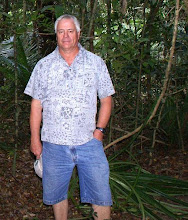
In high school, I imagined myself someday becoming an airplane mechanic. Toward the end of HS, a shop teacher who I respect greatly, taught us how to make blueprints of what we were going to build (the classic top view, side view, and end view concept). I really fell in love with making blueprints, and enjoyed art generally even though I wasn’t all that good at it. By the time I went off to college, I was determined to be a draftsman, and took a number of relevant courses the first year. Somewhere along the way toward the end of my freshman year, I realized that being a draftsman would mean that I would be in a union, and the thought of being in a union really turned me off. I wasn’t smart enough to be an architect, so I turned to my roots, namely agriculture. Thinking back, I’m somewhat surprised that I didn’t discover landscape architecture along the way. I’m almost certain that if I had, this would have been the direction I would have gone.
Having come from a dairy farm background, my orientation was more animal science than plant science, but my coursework gradually shifted, as I really enjoyed botany and plant genetics. Not breaking entirely away from animals, I did research projects in forage legumes (sainfoin) at a B.S. level, then forage grass (reed canarygrass) at an M.S. level, and finally, barley at a Ph.D. level.
Somehow, in spite of all this, I ended up working on a sugar crop. The final choices were sugarbeets with Northrup King in North Dakota with the enticing opportunity to spend the first two years in Germany, or sugarcane in exotic Hawaii. Dr. Heinz, my future mentor at Hawaiian Sugar Planters’ Association (HSPA), picked a day when it was about –10 F at the University of Minnesota, and asked if I had made up my mind. I pretty much had anyway, but I have since wondered if he had been tracking the temperature, because the timing of his call couldn’t have been much better.

While in Hawaii, I took a side interest in turfgrass after I discovered how fast, easy, and profitable it was to grow sod on black plastic. It was an accidental discovery, not something I read out of a book. My interest in turfgrass led me to spend weekends establishing people’s lawns. Before I left HSPA in 1990 and joined Southern Turf Nurseries (STN) as their Hawaii GM, I had established close to 100 lawns. STN was in the golf course grassing business, so joining this company was definitely going from the minor league to the major league…going from 1/5 of an acre per project, to 270 acres on our first golf course grassing project, which was the
Hawaii Prince Golf Club at Ewa Beach (see GoogleEarth pic above). My stay with STN only lasted a little more than 2 years, when project opportunities dried up as a result of Japan going into a depression.

While at STN, I established the largest sod farm on Oahu from the ground up, meaning that it was my job to clear the land (dozer), set up the irrigation system, create separation between beds (tractor trencher), build a fence, and purchase temporary buildings and appropriate farm equipment. To this day, the 40’ wide black plastic beds with 6” width trenches (up to 3' deep) between them can be seen on from space within the city limits of Kahuku, Hawaii (see GoogleEarth pic above). We only had about 10 acres to work with, but we could turn over sod every two months by growing sprigs sandwiched in ½ inch thick mulch on black plastic. The soilless sod was mainly used for lake banks and areas difficult to establish with sprigs on golf courses. Sprigs used directly on golf courses to establish fairways and greens were obtained on site from prior-established driving ranges or other features.
While I have returned to sugarcane research again, I still enjoy messing around with turf on the weekends. I brought a zoysiagrass variety to Houma that I bred and selected in Hawaii (from a cross between El Toro and Emerald) even before joining STN. I am extremely pleased with how it looks here, but I really can’t do any more than fool around with it as a hobby for the time being. Because it is fine leafed, it is ideal for small areas where people want something that is deep green, looks elegant, keeps weeds out, and requires very little maintenance. It actually looks better in moderate shade than in the full sun, which is a plus. When I returned to Hawaii after being away for 12 years, I was stunned and gratified at how well this zoysiagrass looked on the lawns that it was established on some 15 or more years earlier. I would say that it has stood the test of time. It was eventually given the name, Links by someone I had worked with in Hawaii…not a name I would personally selected, but nevertheless the name it has had over the past 15 years or so.
Apparently, it is still being sold in Hawaii.
 A few years back, we were experimenting with a relative of sugarcane (Saccharum) where I work, called Erianthus bengalense, the genus of which I believe in Greek, means red (eri) flower (anthus). We are no longer experimenting with Erianthus bengalense, but still have an interest in Erianthus arundinaceus, which is more robust, but, in my opinion is considerably less attractive. Unfortunately, in the USDA Germplasm Resources Information Network (GRIN) system, all the species within the Erianthus genus got lumped under Saccharum, which is technically not accurate.
 I was enamored with the beauty of the plant, so I planted a stool of it in my back yard for its ornamental effect before the field it was in got plowed. The last two years, it was beaten up pretty badly because of severe storms, but this year, it achieved its full glory. [I added a second picture taken about two weeks later; note that the white speck at the top is the moon in the background]